Friday, December 22, 2006

Online Casino With Bet Min 0.01 On Roulette

DONNIE DARKO

Director: Richard Kelly.
Starring: Jake Gyllenhaal, Maggie Gyllenhaal, Holmes Osborne, Daveigh Chase, Drew Barrymore, Mary McDonnell, Patrick Swayze, Noah Wyle, Katharine Ross.
Production: Adam Fields, Nancy Juvonen, Sean McKittrick, Drew Barrymore.
Distribution: Moviemax.
Year: 2001.
Duration: 113 '.

Behind her ordinary appearance as an adolescent, Donnie Darko hides an uncommon intellectual curiosity and a mild form of schizophrenia that is manifested by hallucinatory phenomena and episodes of sleepwalking. Problems Donnie runs stand aside on the edge of that world in which blunt that sometimes shuns and returns with anonymous and devastating raids. On the night of October 2, 1988 an anthropomorphic rabbit named Frank draws him in his sleep in a golf course to tell him a startling prediction: the world, says the grotesque creature, will end in 28 days, 6 hours, 42 minutes and 12 seconds. Used to not trust their delusions, Donnie store soon the prophecy if it were not for the fact that Frank saved him from certain death: a plane that night in fact, even the engine of a plane that no one will ever find, crashed into the supersonic home Darko ending dive on the bed of Donnie. What is it then that you believe or not Frank? More and more subtle and insinuating, the monstrous doll continues to haunt the boy for all the time that separates it from the revelation ...
theatrical release in late 2001, when the American public could not stand to see planes stuck in houses or buildings, Donnie Darko is raised to new life two years later, when a remarkable phenomenon of spontaneous proselytizing U.S. teenagers make their own flag generation ecstasy Vandals conquered by the hero justified by the motto of Graham Greene that the destruction is an essential part of the creative process. Although many have tried to label it, Donnie Darko is impervious to gender classifications: not a thriller, not a science fiction movie and do not fall in that vein in coarse and overseas call teen-movie. While adhering in part to each of these definitions and maybe a few more, Donnie Darko, in fact, the crosses, also proposed as a sort of reckless philosophical and scientific inquiry. The young Richard Kelly, who just signed a 26 years of the most striking cinematic debuts of all time, manages to condense their questions about time, space, the existence of God and parallel universes, individual ethics el'utilitarismo social inexhaustible into a screenplay with a modern architecture, labyrinthine, and solid, at least in intention, brilliant. After the two visions of the movie (at least) requires all indications, the clues, and the crossings, to sum up, the stranded Kelly narrative nodes are placed in the mosaic of consistent interpretation and still open. That's because Donnie is essentially the story of a search and research, as is known, feeds on itself and therefore assumptions, intuitions and Tentative certainly more than the final outcome. What is the awareness reached the summit by Donnie overlooking the lush valley of Middlesex and therefore relatively important in any event is not for us to report to the viewer not to spoil the pleasure laborious investigation and not to impose a reading of which would never be sufficiently secure. What can we do instead is to try to trace the main lines of work followed by a sorcerer's apprentice quell'ingegnoso Kelly. Donnie Darko such as condensation and sublimation of inner anxiety in the cinematic story understanding (not just teen) that as a moral duty to obey the need to make a clean sweep of semplificazionismo misleading to those who sell cheap panache interpretations of reality; reasons topicality theocentric metaphysics of trying to replace it with a new focus on the physical theory at the time equally unprovable, of parallel universes, and then disrupts the social order lifting all those driven by an entity and perhaps funniest terrorifica rabbit Frank (They Made I do it ....) end up self-exile from the world. With regard to the extraordinary (and late) that impact the film had on the public, we try to get away with a comparison. Donnie Darko is like a Rubik's cube or one of those games of intelligence that you can not leave until you have solid-colored each face of the damn box or until you have connected in a continuum of four segments of the 9-point strategic damn imaginary square, in short, those puzzles that you have fun once resolved to submit to a friend for the sake of sadistic and see him trudging down in your own mistakes. So a game or if you prefer, an enigma.
Like all the riddles of course, Donnie Darko contains a solution. But Kelly does not offer you. He wants the viewer there reasons, manipulate the cube, the paper mess that, if we take it for themselves. Just a shame that the taste of the intellectual challenge Donnie Darko end up watering down the knowledge of a voluntary and sacrificial gesture that gives the dazed teenager flooding schools, house-burning and devastation statues (which is horrible), the sublime dignity of a romantic hero.

review of Alessandro Montanari

Sunday, November 19, 2006

Powerpoint The Subjunctive

Celebrating the first candle of Overlook with a book


During those days when we celebrate the first year of life on Overlook Entertainment comes in the first essay library of film criticism of our collaborator Alvise Barbaro: Double joy and celebration!
"Frankenstein. A monster of celluloid between horror and parody" examines, through the figure of the most famous monster in cinema history, the languages \u200b\u200bof two of the most beloved film genres and (unfairly) overlooked by critics and audiences. It says between the lines and without boring the changes of a century of cinema.
"That's so tragic and pop ..." as it says Giannalberto Bendazzi, prefacer of books and professor of the history of animation. Good reading!

Frankenstein. A monster of celluloid between horror and parody
Alvise Barbaro
Ed Costa and Nolan
price: 17,60 €

Friday, October 6, 2006

Bus To Toronto From Fredericton

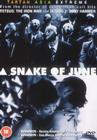
A SNAKE OF JUNE (Rokugatsu no Hebi)


Director: Shinya Tsukamoto
Starring: Asuka Kurosawa, Yuji Koutari, Shinya Tsukamoto, Tomol Taguchi, Susume Terajima, Mansaku Fuwa, Teruki Hanahara.
Production: Shinya Tsukamoto
Distribution: Revolver
Year: 2002
Length: 74 '

A woman who works as a telephone operator in a mental health center, a husband who shuns the sexual contact because of an obsession for' physical hygiene and another man, a voyeur photographer, which is like a snake trap between the couple after she saved him from suicide.
It 's a terribly intricate and murky affair that Shinya Tsukamoto is at the center of his latest film, according to the same director as "the most strongly wanted and desired" of his career. Three people, even three people, embodied in a metropolis metal tank and stunned by the endless ticking of a flood that dilutes the majestic blue-Tsukamoto night in which he wanted to paint the black and white original film. A Snake of June is proposed to the viewer as an object elusive, symbolic, certainly artistic. Miser key reading and interpretation, the film strives for a wealth of sensations, impressions visual and explosions. Tsukamoto in fact organized the plot in a narrative maze that changes perspective Caracalla repeatedly from start to finish on the thin line between realism and sophisticated linear and far from a lyrical and dreamlike surrealism. The viewer is thus left without points of the compass, perpetually unaware or unsure of where he is: if in a dream, in a real place, an escape in the mind, in a flasback or in the future or beyond still undetermined. Although an association of ideas and a bit 'like a patient on the couch of a psychoanalyst, Tsukamoto speaks of grief, guilt, lack of communication, freedom and repression of the drives by selecting as thematic glue observation. Observation focused on the body, whose forms and expressions explain and describe being much more than the dialogues, often intentionally meager and insignificant. There is a husband who does not touch or even see more young wife and a voyeur who secretly photographed in his intimate moments of the forces abandonment, blackmail, to take a perverse game that is only meant to release repressed desires. "Do what you really want" the intimate, the photographer before discovering in the magnification of his shots, just as in Antonioni's Blow-up, something hitherto unseen simply because they saw. The irregular shapes of the breasts, the photographer Rinko understands the embryo of the same disease, a cancer that is ravaging also his meat. Erotic gaze of the voyeur is transformed into the clinical gaze of the doctor. In an attempt to restore the life that she had saved, the photographer Rinko forces to be examined. Operation would be sufficient to cure, the diagnosis is early, but the husband prevents the womb of the wife being mutilated. Rinko while abandoning himself to the husband, the photographer begins to haunt him dragging himself and the two spouses in a spiral of violence which, paradoxically, will lead each of the Atonement of their sins in a sort of redemption through sin.
A snake of june, as already mentioned, is not a film-friendly vision. However, if the viewer at the end resist the temptation to let him escape to his own wanderings and certainly for the aesthetic appeal of the staging, unusually rich in close-ups, details, shadows and mysterious symbols. Tsukamoto's gaze transcends the matter told the passes for reasoning on the form as when Rinko receives the first packet of photographs. The shots of the actress, moment by moment, in fulfillment of a movement explicitly sensual or erotic dall'intromissione back of the camera. Rinko sliding photos over each other and the movement seems to take place, slide the frames and the cinema ... accomplished. It just so happens that we remember Suddenly the film is nothing but an optical illusion that can imitate life thanks to the combination of 24 photographs at a later

.* * Review by Alessandro Montanari

Thursday, September 21, 2006

How Much Do Uggs Cost In Woodburry

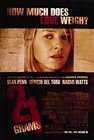
21 grams


Directed by: Alejandro Gonzalez Inarritu.
Starring: Sean Penn, Benicio Del Toro, Naomi Watts, Clea Duvall, Danny Huston, Marc Musso, David Chattam.
Production: Alejandro Gonzalez Inarritu, Ted Hope, Robert Salerno.
Distribution: Bim.
Year: 2003.


After a youth spent badly between petty theft, alcoholism and some steps in prison Jack is managed with difficulty to get up clinging to the word of a stern and inscrutable God, after having granted the grace of redemption, puts his faith to the test again. With the same car on which he has stuck to mo 'poster of the message "Jesus saves you," Jack accidentally kills her husband and two daughters Christina, wife and mother model. By a strange trajectory of the heart of the case will end in the chest of Michael Paul, a math teacher ready, because of a serious illness, his final farewell to the world. Paul returned to life unexpectedly difficult to accept the "blame" to be alive and hires a private investigator to discover the identity of the unfortunate donor. The tragic fate incident that has temporarily pulled the upset, however, death to the point of pushing it as a meteorite mad at Jack and the same Christina. Chained in a tangle of human desperation three "damned" will collapse together into the abyss of suffering, but eventually someone will rise again.
He arrived in Hollywood after having directed only one film (Amores Perros), the Mexican Inarritu has paid off in the best way trust American film of the establishment who did not hesitate to make available two pure-bred horses as Benicio Del Toro and Sean Penn. In addition to the emotional upset and even involve the public in fact 21 grams also offers significant insights formal. The structure of "mosaic" in which, without chronological order, are disorderly scattered fragments of history acting virtuously while softening the overall success of the work content into decidedly hyperbolic and arouses the attention of viewers less likely to existentialism chiaroscuro that would otherwise not easily withstand the impact with a lot of inner struggle. It seems that the idea of \u200b\u200bbreaking the time linearity was already covered in beautiful script by Guillermo Arriaga, whose trial is raised so more than one step, but we can not rule out the possibility of an operation to post-production experience that is, during the editing to smooth out the emotional rush of a plot apparently overloaded. However the disruption of history proves to balance a brilliant and necessary action and so the "diagnosis" as the "treatment" given promptly to the text give the measure of the remarkable sensitivity of the film authors. Inarritu footing the rest of the camera and the accuracy of staging, set to a dominant photo peculiar to each fragment of history and almost constant use of hand-held camera, reveals the talent of an artist with a solid shoulders broad enough to refute the time the sentence strip of those critics who have spoken about 21 grams of a product as cunningly designed to measure the festival. Just have some basic notion instead to understand the significant dangers that were hidden behind a film like this and for that matter prefer to frame 21 grams as a morally high effort to communicate with the public through what the public tends to ignore: the suffering. The Mexican director does not retract in front of the shame and torment, but with infinite patience, finally, the searching out around the hole that everyone consciously or unconsciously left in the defensive wall erected to protect their pain. The camera then turns to Inarritu metaphorically in that St. Thomas had put his finger in the wounds of Lord all'irragionevole reason to bend the truth of the soul. The wounds of the men but they are not revealing how the wounds of the Son of God, and so the mystery deepens and the soul remains in quell'impercettibile weight just 21 grams, of which the body releases in the exact of death.

Review by Alessandro Montanari

Thursday, July 27, 2006

Brazilian Creatine Hair Treatment

THE CONSEQUENCES OF LOVE


Director: Paolo Sorrentino.
By: Tony Servillo, Olivia Magnani, Raffaele Pisu, Adriano Giannini, Angela Goodwin
.
Production: Domenico Procacci, Nicola Giuliano, Francesca Cima, Angelo Curti.
Distribution: Medusa.
Length: 100 '.
Year: 2004.

The usual hotel room, after dinner bent over a poker table rigged and sad, a dose of heroin taken invariable habit for the Wednesday morning each week and a suitcase to slide in the belly greedy for a good bank Switzerland. The life of Titta Di Girolamo, dreary middle-aged accountant chissaccome finished cleaning up money to Cosa Nostra, runs like a normal saline drip: Drip, regular, without emotions or tremors. Between a cigarette and another, behind the windows of the great hall and pulitssima, Titta observes the movement of a world that always feels less interest. Indifference is the business card exemption to anyone who dares to cross the border of that intangible mutual ignorance that sociologists define good performance with "civil inattention." However, even if the future seems already written and scored, something in the life of Titta has yet to happen thanks to the obstinacy of a young white waitress. But unfortunately the consequences of love will not be negligible.
After the promising debut de Man Up (2001), by Paolo Sorrentino's The Consequences of confirmation have excellent story-telling skills combined with a strong propensity for the film medium. Born and raised as a writer, the Neapolitan director builds the written page the best conditions for the next job of staging that at this point could also be limited to a mere exercise leaflet. The narrative architecture of The Consequences of Love indeed it contains a refined
clockwork device perfectly calibrated, calibrated in the use of ellipses, references, revelations and reversals of perspective, the time unconscious of the curiosity of the viewer. Rarely a script that technical merit is not accompanied by directions and interpretations of the same tenor. The rule, unwritten and unprovable, implies that only a virtuous circle
hand demiurgic writer is capable of triggering: a great script stimulates memorable performances, and sometimes unique (news of Brian Singer of The Usual Suspects?), both in front and behind the camera. Under the watchful eye fluid and more mobile Sorrentino, Tony Servillo describes the essential traits measured and the dark isolation of an "anchor man", then suddenly sucked into the vortex of the same emotions he had deliberately abdicated. Eminently theatrical training, Servillo moved into long silences Titta an explosive mixture of instinct and method that is reminiscent of the violent and fragile of the great Gian Maria Volonte. And 'the stage, with its corollary of evidence, direct comparison with the public, long, uninterrupted performance, the actor put in the suitcase the deep understanding of the character for which you could be an entirely credible Cyrano even without the inevitable fake nose. Titta is a man who has renounced the words, and with them for life, and his gaze has an invulnerable shield. The ability to Servillo is to die little by little the mask he has patiently modeled using the same hesitations, contractions and tremors rather than actual deeds. After the ice carved his David-sorry, Servillo then the power to dissolve slowly over the fire of renewed excitement, lifting it for a moment from the torment of perpetual immobility which Titta, even in death, seems doomed by Fate. Among the many merits Sorrentino also notes the effective use of voice-off and fascinating. Among the few who metabolized the lesson truffautiana, Sorrentino has given thought to the words and amplified Titta considerations amply justify the interruption of the natural flow of the narrative. Admittedly, taken by the enthusiasm of the talent scouts are probably exaggerating, but man is more that we held the scream in her throat. Why Sorrentino's difficult to describe that quality which, to be celebrated sport in his film debut, is about a player who sees the door. " It 'something that is not taught, a sixth sense: a seed that falls only a few fields. And in even less sprouts .*
* Review by Alessandro Montanari

Friday, July 7, 2006

How Do Sterilize Home Made Jam

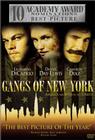
GANGS OF NEW YORK

Director: Martin Scorsese.
Starring: Daniel Day-Lewis, Leonardo DiCaprio, Cameron Diaz, Liam Neeson, Hanry
Thomas, John C. Reilly, Jim Broadbent.
Production: Miramax.
Distribution: 20th Century Fox.
Year: 2002.
Length: 168 '.

Unparalleled investigator of street life and behavioral codes of the sub-urban cultures, Martin Scorsese has always been convinced that America, as stated in the trailer that accompanied the release of his film in Italy, was born in the streets. Therefore inevitable that the chronicles Herbert Ashbury in 1860 on the battles for control of New York neighborhoods and popular uprisings against the lever to turn the Civil War ended his delirious visual talent, more and more feverish and dusk. Here it is Gangs of New York, bloody and vaguely Shakespearean genesis of America today.
Gangs of New York is a violent film and frontal impact, "a work in black" that stuns the wild ruggedness of which is soaked and yet forces them to reflect and to question if indeed one is going to unravel, one after another, the many threads that Scorsese wraps on their titanic reel. Two of these threads have names and precise identity: they are called Amsterdam (Leonardo DiCaprio) and Bill Poe, better known as the Butcher (Daniel Day-Lewis). They are the gang leaders of the Irish and Native Americans, tribal hordes which face each other in epic battles to be included ferocity, however, in the general context of a colossal struggle for survival that does not cover other method except the most barbaric violence. Scorsese is not accommodating, not at all interested in building or edifying didactic parables. His trademark sense in philosophical and formal, as we know, hyperbole. Excess. In Genesis Scorsese, in which there are suggestions of biblical character, to reign is only chaos, a chaos primordial. At Five Points intersection where five roads tangled, everything blends into a magma of ethnicities and social classes, sacred and profane, pity and vengeance, of reason and absurdity of rules written just for good living and legal of the strongest customarily applied in the streets. Good and evil do not exist, or rather, do not yet exist. Are being developed and determine the boundaries will be the winner, the one who will survive the final massacre described admirably by Scorsese as the "Big Bang social" which will give rise to America. It seems acceptable, at least to us Europeans (unless of course the Americans who have loved the film), the idea Gangs of New York which is a kind of slide that contains the germs have developed in America today, a melting pot of contradictions and where live the sanctimonious moralism and lasciviousness nihilistic individualism pushed and democracy, and the healthy vegetarian death penalty, the myth that even the most disadvantaged can make its way to the uninsured and health care denied. The America he has in mind Scorsese, to his training inclined to interpret life according to the Catholic sense of the "Valley of Tears", it is not good or bad. It 's just the order, the order was given that imperfect man to manage the pre-social chaos. Exemplary figure in this sense is the Butcher, Eater relentless and strong-willed but also "fair" and above all an organizer of the first, but a terrorist, a model of coexistence. Astonishing mastery of interpretation of reviving Daniel Day-Lewis, capable of detonating any primitive instinct in two occhiacci grinning and perpetually drunk with blood, madness and animal instinct of survival. Less restrictive but DiCaprio and Diaz especially, perhaps a little help from the only character of a weak screenplay that aspires, with moderate success all'onnicomprensione dostoevskiani novels and Tolstoy. As Scorsese said this is not a man and his conciliatory firmness intellectual moved intact to the screen through the grammar of a pitiless staging that did not retreat in the face of anything that dismembered fingers, knives to dismember bats that break through, lynching crowds and spectators who applaud condemned the hanging of four randomly selected from the urn of the miserable . And 'maybe because of this cruel and innocent poetic visual horror that the overwhelming accumulated throughout the film then dissolves in a thrilling final in which the background of two tombstones and a land made fertile by the blood of guilt now deleted , stands a symbol of the rough New York (injured) American. E 'by Martin Scorsese, after the metaphysical abstraction of Kubrick's 2001: A Space Odyssey, the second author's cinema epic on mankind. Yes, the human race, because, like it or not, America, a modern version of the biblical Babylon, is necessarily "the part for the whole" .* *
review of Alessandro Montanari

Thursday, April 13, 2006

Sleeping Aid Schematic

Italian cinema has little memory, word of Claudia


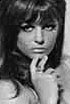
Claudia Cardinal has landed on March 29 in Busto Arsizio (it's appropriate to say, since the Malpensa airport is only a few kilometers) for a tribute to his friend and master Luchino Visconti's film festival in the town was commemorate the centenary of his birth with a screening of the rare stars of the Vague, restored for the occasion by the Centro Sperimentale of Cinematography in Rome.
many journalists waiting in the lobby of the golf club Solbiate Olona, \u200b\u200bwhile I have my heart in my throat, because I remember a beautiful film that I loved very much: Once Upon a Time in the West by Sergio Leone, "a film remembered by all young people "she will tell me the interview.
Visconti Di says: "I remember a wonderful and full of affection, but the set was a beast." He tells us then, with plenty of details and anecdotes, the rigor and perfectionism of the teacher and how important it was her teaching for her and all the other actors who have had the good fortune to work with him.
The actress lets go to the memories: mentions Unknown thieves, his first film ("I, little of the giants"). Nostalgically reminiscent of the Italian cinema of the past, the '60s, "a great season, full of professionalism and rigor, but also passion. We worked with great joy, was like being in a family. While today the cinema has become just a business, and this bothers me. " And he sees the cause of this change in the producers, "which in Italy are not likely for a more ambitious project without the security of an economic return." I agree, and then dare to ask if maybe this is the cause that drives most of the Italian artists to "escape" abroad. "In France [where he lives] there is more respect for the art and the artist, there is a different culture of cinema, "says the Cardinal, with mild polemical tone. His words are then reminded that yesterday, still here in Busto Arsizio, the screening of Rossellini's Rome, during the tribute to the master, said Renzo Rossellini, the son of the father of Neorealism, "in Cinema Italy is regarded as a newspaper the next day gets old. " It is perhaps for this reason that, on the centenary of the birth of two of the greatest authors of Italian cinema, exhibitions and events are organized all over the world, while in Italy, home to both, it is hard to find? "Unfortunately - the actress says with regret, Italian cinema has very little memory." And when he suggests that perhaps this loss of memory, and the consequent impoverishment of Italian cinema, is also due to the escape of our talent abroad, holding me back saying: "I get suggestions for new films from around the world, but not Italy. "But he hastens to add-actress-these events, festivals such as Busto Arsizio, increasing more and more, have a good time to acquaint the public, especially the younger, very sensitive and receptive to a quality films, which is part of our history and should not be forgotten. " It is for this reason, suggests Franco Mariotti, associate artistic director of the BAFF, Vittorio jacket, which should promote the distribution of the films of the past that are now virtually unobtainable.
But then, if we look only to the past, there is no hope for the new Italian cinema? "Maybe something is moving in recent years," she says with optimism. "Maybe we need to start from the schools of the Italian tradition?" I suggest. Claudia Cardinale avoid the question evokes the prestige of the Italian school of the past, international nature of his breath. Interrupting you, then, ventured that perhaps, without the great masters, there may be more than large schools. Responds with a smile: "I got"

.* * taken from Alvise Barbaro, Divine Claudia, La Padania, 29/03/2006.

Tuesday, March 28, 2006

Model Question Paper For Nebosh

The film festival in Busto Arsizio


It is open Saturday 25, the fourth edition of Busto Arsizio Film Festival, an event little known, but which soon took on an international character, considering that this year there are between Hotel Vittorio Storaro (who opened his exhibition "Writing with Light"), Claudia Cardinale and jurors (all Oscar winners), Luis Bacalov, Carlo Rambaldi, Osvaldo Desideri, Gabriella Cristiani and Gianni Quaranta.
The event, which stands for the laudable artistic choice to focus on quality films made in Italy, will continue throughout the week, as well as in the rooms where the screenings are held at the Area Festival of Piazza S. John, where daily meetings are held with the hosts, the Fondazione Bandera, where there is an exhibition of Storaro, and the restaurant "Il Melograno", home of Dopofestival.
See the website for the program in detail

Thursday, March 2, 2006

Cainine Swollen Teats

parody (III): The proceedings


We come now to the analysis of those specific procedures that enable the transformation of text into a hypertext, and can make any relationship between parody and original texts, thus amplifying the comic element. Building on the analysis Harries, I was able to highlight five main processes: the repetition, deconstruction-inversion, the literalization, the inclusion of a foreign element exaggeration.
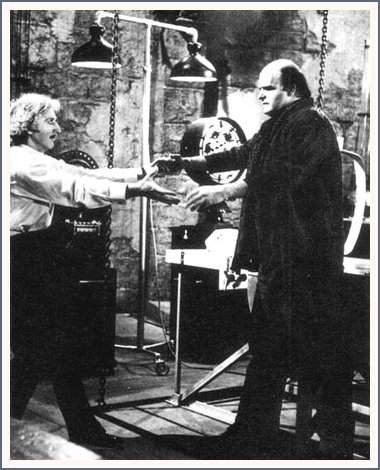
The repetition of easily recognizable elements serves to highlight and strengthen the similarities of parody with the reference text. We have already said that within a text, we have the presence of parodic elements of similarity and inconsistency, and that both are essential to create a fun conflict. The iconography of a genre film is an often subject to repetition: the Frankenstein junior careful philological recreation of the setting, music, photography and black and white horror film style of the '30s created a striking contrast to the comic situations that occur, making it even more hilarious results.
Ultimately, the repetition is a form of quotations, of which we spoke earlier about intertextuality. And it comes through those same processes: the use of the same actors, the same iconography or the same style.
Deconstruction-reversal is a procedure that is based on the recovery of items or situations are easily recognizable and their deconstruction and modification in order to create inconsistencies in the expectations of public. Consider the scene of the girl who plays with the monster in Frankenstein Junior: knowing the source text, imagine the tragic end of the little helpless. Our fear is then reinforced by the mischievous look of the monster just before the fade to black. But the next sequence abruptly changes the text and leaves the viewer amazed (and amused) when he sees the girl ordered the monster to play with her swings. Another interesting example of deconstruction, but this time not narrative style, can be found in Top Secret!, Where, in a scene in a Nazi command, is brilliantly parodied the effect of depth of field to "Orson Wells" at the bottom framing two officers are talking, while a telephone, apparently magnified by the closeness of the camera lens, creating the illusion of a room very deep. Suddenly the phone rings and an officer approaches to respond. Only now the audience is aware that in reality the room is very small, the officers are not so far away and the phone to get out of hand. Other typical examples of this process are the use of men to share the authors clearly female, the intrusion of famous people in secondary role and use of inappropriate canonized iconographic elements, such as the candlestick to shed light in dark corridors, within horror iconography, but is used in Frankenstein junior off.
The third procedure is that we analyze the litteralizzazione, creation, ie, the element of parody through the manipulation of language, word games, "crippling" of names and sounds or their misuse. Typical examples are the names of the mangled film Spaceballs (Spaceballs, 1987, Mel Brooks), where he becomes Darth Vader Dark Helmet, Yoda and Jabba the Hut Yogurt becomes the Pizza Hut. Or Riposseduta of Nancy, who, calling Regan in The Exorcist, creates a funny reference to Nancy Reagan through the combination of the two names. Misuse of language is found in the plane in Love (Airplane!, 1980, Jim Abrahams, David Zucker and Jerry), where a ticket-smoking (smoking ticket, ticket literally smoking) is represented as a ticket issuing materially smoke. Word Games we find them in abundance in our junior Frankenstein, where abnormal brain becomes the brain of Mr. AB standards.
The inclusion of foreign elements serves to reinforce the inconsistencies with the source text, thus keeping alive the contrast between similarities and differences of which we spoke earlier. Its presence in an easily recognizable iconographic generates hilarity: think of the ice cream truck or at the level crossing in the middle of the empty prairies of the West present in the South and half of fire. Often, part cinematic parodies scenes unrelated to the original texts and texts from other easily recognizable. This is the case of Top Secret!, Which cites a sequence, de-contextualization, the film Blue Lagoon (Blue Lagoon, 1980, Randal Kleiser).
As the last procedure we analyze the exaggeration, which extends the conventional elements present in a film beyond their reasonable limit. Frankenstein Junior is one example in the recitation of Wilder, always over the top, as in the sequence of the lesson when he pronounces a panegyric or university life, getting ready to complete the experiment. And yet, nitrite horses that always accompanies the name of Frau Blucher is the exaggeration of a cliché of old horror movies, which becomes comical because iterated throughout the film, in every place and time .* *
by Alvise Barbaro, Frankenstein. From horror to parody , Thesis, University of Milan, 2004.

Monday, February 13, 2006

Play Pokemon Saph Online For Free

parody (II): evolution of a language (As well as primer for fans of the genre)


now analyze the major changes that the film has been parodied in a century of cinema.
making based on parody of early cinema is already a strong and self-imitation: the film of 1900 by Porter Uncle Josh at the moving picture show shows the hero in the movies enter into the film and become part of it. In the early '20s are clearly parody movie titles such as The Frozen North (1922) Buster Keaton, who joked on the first cliché of the wild west movie, The Three Must-Get-Theres (1922) Max Linder, parody the movie The Three Musketeers, played by Douglas Fairbanks in the previous year, or Sherlock jr. (1924), Keaton always, lead author (and artist) of parodies in the years of the silent era.
During the 30s is interesting to note the adoption of the language of parody also from the animated film: the material film parodies and its iconography canonized beginning to provide some avenues for mocking treatment, and Warner Bros. in particular was able to exploit this new road with funny cartoons that satirized mainly on famous characters of Walt Disney: Foxy was a parody of Mickey Mouse, Minnie and Honey Brunno Pluto. Subsequently, the cartoons of Warner abandoned these people, but still maintained parody recognizable elements, such as self-referential film, which the cartoonist Chuck Jones was the main promoter.
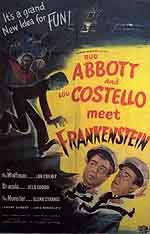
The 40s recorded a massive increase in film parody, which begin to be treated as a separate category. This is due to the Marx Brothers movie, and I like the cow ... (Go West, 1940), Bob Hope, as The palaface (1948) and especially the comic duo Abbott & Costello (in Italian Gianni & Costello), of which we can not fail to mention the brain of Frankenstein, the monster first parody, and more generally on the Universal monsters. In this particular film, it is interesting to note the emphasis on the element of parody on the interpretation of the actors in the parts of the original monster (Bela Lugosi plays Dracula, Lon Chaney Jr. Wolf Man and Glenn Strange Frankenstein [Glenn Strange replaced Karloff in the last film in the series]), to create a strong self-referentiality.
Always regarded as a kind of second order, the parody will be ennobled in the '70s by a new generation of writers such as Woody Allen (Play It Again Sam [Play It Again Sam], author, 1972; Zelig [id], 1983) and Mel Brooks, which we can not mention the masterpieces of the genre such as Blazing Saddles (Noon and a half of Fire, 1974), Young Frankenstein (Frankenstein, 1974) Silent Movie (The Last Silent Movie, 1976). They seize
parody of the process into an instrument of critical analysis and depth of the film industry, becoming part of a broader design overhaul of the philological and nostalgic Hollywood movies, which started in those years from all over the film industry .* (more. ..) *
taken from Alvise Barbaro Frankenstein. From horror to parody , Thesis, University of Milan, 2004.

Thursday, January 19, 2006

Thyroglossal Duct Cyst

Parody (I): not semlice


Speaking of parody, today, we naturally think of a film comedian who bases his appearance on the inclusion of humorous gags and jokes in a historical context or iconography of us already know. In fact, the process of creating a parody is far more complex and involves a large body of knowledge and experience: speaking of parody not simply refer to the comic genre or a particular type of humor, but to a text, or better a hypertext, the result of a thorough process of rewriting, which Gerard Genette speaks in his study of transtestualità.
Aimeri Frasca and remember that "The parody acquires importance not only as regards the result as an end in itself and its possible success at the box office, but also (and especially) because with the public, to aspire to and understanding the success of the product, it must be put as "philological study" of the kind that purports to represent, using the repertoire of knowledge of the operating rules of a genre that has every single spectator by virtue of long experience of vision. " Dan Harries
specifies that it is not a simple kind, nor a anti-genre (or meta-kind), but a "discursive process", a methodical approach to a particular text, which has the task of recontextualization through an ironic deconstruction of his royalties. It's an "intertextual discourse," that is characterized by a dialogue between different texts, where the irony becomes the central element, in order to distinguish the parody from the other forms of intertextuality. Mikhail Bakhtin argues that dialogue in a narrative form inevitably creates a stratification of language, a multilingual full of contrasts, which is the basic element of humor. The irony, moreover, according to Harries is generated not by the inconsistencies between the parody and its source, nor from their similarities, but the contrast generated by the presence of these two aspects in one text.
The parody is also frequently associated, sometimes rightly, two other forms of humorous intertext, from which, however, it is good to distinguish: the pastiche and satire. The first is a form of comic imitation lacks the critical distance characteristic of parody: the search feature humorous imitation of a text for its own sake, without drawing a deconstruction of its fees and languages. The satire, however, while presenting a strong critic, who is accompanied by imitation, is concentrating its efforts on a social-policy issue, while parody operates on a strictly literary and artistic .*
(more. ..) *
by Alvise Barbaro, Frankenstein. From horror to parody , Thesis, University of Milan, 2004.

Saturday, January 7, 2006

Using Oragel On Penis

The comedy horror genre (IV): Long live the horror themes


After starting the discussion on the existing (always referring to Chatman's essay), we speak now of the events. I now reiterate the concept of standardization of the plot of classic genre films. The horror genre usually meet these general guidelines: a negative character (often with special paranormal) is hindered by one or more persons (the noble principles) in its criminal plans: Dracula Van Helsing and his companions fought to ensure that sucked the whole of London, Dr. Frankenstein chases end of the world her baby to avoid you sow death and destruction, and in both these examples there is a love story in the background. But while in general compliance with these rules, this particular film has a few recurring themes that are worth highlighting.
important is the concept of double, already so dear to the German cinema of the silent era (The student of Prague), and then taken from horror American. This interest was rekindled in the filmmakers (not only) at the beginning of the twentieth century studies of psychoanalysis, Sigmund Freud, who cataloged this concept in the sphere the "uncanny". The issue of splitting can be traced throughout the history of horror, from the gothic novel: if the emblematic case is represented by The Strange Case of Dr. Jekyll and Mr. Hyde, Frankenstein can be found in already, in the embryo, the ' idea of \u200b\u200bsplit personality in the middle of good and bad, due to the eternal division between Good and Evil: Victor Frankenstein's creature seen in all the wickedness of his genius. The same concept of the double image is also found in all vampire movies, even if reversed: Dracula in the disturbing element is the lack of the double, the vampire does not reflect his image in the mirror, is without that double that everyone else has, so as to be different, just uncanny.
More recently, the theme of the double has been taken up repeatedly by the directors in the thriller and horror: from Hitchcock (Psycho [Psycho], 1960) De Palma (The Two Sisters [Sisters], 1973) George Romero (The Dark Half [The Dark Half], 1990).
Related to this issue in some way, and always be derived from studies conducted by Freud's psychoanalysis, is the interest that the horror genre has always shown towards hypnosis. Already in the early 20's the new art of cinema was compared to hypnosis for the type of use which underwent a passive spectator, in support of this thesis in 1921, Jean Epstein, critic and filmmaker, wrote an article. Indeed, in the late '50s, the film Horrors of the Black Museum (1959) by Arthur Crabtree uses hypnosis to influence the audience during the movie: as he explains Ruggero Eugeni, the beginning of the screening of the film , a doctor and hypnotist appeared on the screen, using the 'ipnovista "mesmerized the audience, trying to build a stronger identification with the story.
But it is a content level that the subject of hypnosis has had more on horror movies. The studies emphasize the centrality of Bellour who have had three films in this sense of Fritz Lang: Dr. Mabuse, The Testament of Dr. Mabuse (Das Testament des Dr. Mabuse, 1933) and the evil Dr. Mabuse (Die 1000 Augen des Dr. Mabuse, 1960), who expressed over a period of more than forty years, the permanent presence inside the cinema of hypnosis as a disturbing element. Over the years, many horror films have used this issue taken by the German cinema: from Dracula to The Mummy, many of the classic horror characters make use of hypnosis, the Frankenstein monster is, at least initially, be a free will that responds to the commands of those who put him under his control, just as it does to a person under hypnosis. But it can be traced back to 1919 to see introduced in the film the theme of mind control: in The Cabinet of Dr. Caligari Wien, Caesar committed the murders under the influence of Caligari, in which case it is a sleepwalker, but the concept does not change: the hypnotized person falls into a trance state, deep sleep, the first to obey the orders of the hypnotist, that is, the sleepwalker like hypnotized, before falling under the control of another person, must leave their state of consciousness and becoming something else (alter-ego), a double of their person will be subject to a stranger, as happens to small Regan, owned in the movie The Exorcist.
And here we are back to the concept of double that, with this particular value of the figure itself with no other independent mind, we express clearly in the figure of the surrogate (Metropolis [id.] Fritz Lang, 1926, Blade Runner [id.] Ridley Scott, 1982) in the fantasy-horror genre, or more traditional horror, the zombie (by White Zombie [id.] Victor Halperin 1932, at The Night of the Living Dead Romero and its many sequels) now become the archetypal figure of the genre. And is it not fair to say that both of these figures are an ancestor in Mary Shelley's Frankenstein? The creature, like a replicant, is assembled with several pieces by a scientist; and at the same time is a dead man back to life as a zombie. Both zombies surrogates also stress the importance of further recurring theme in the horror genre: Death. It seems obvious to say it, but Death is a very important element in the horror genre which can not give up: the allure of Death, as Edmund Burke said, in his treatise on the Sublime and then, in addition to being our greatest fear is also an attractive appeal to the audience of the horror film, moreover, we must recognize that the most famous stars of horror, from Dracula to Frankenstein, Freddy Krueger from the modern mummy, died back to life, and that, very often, locations of the film We are inspired by the horror of death all the time: from Poltergeist (ibid., Tobe Hooper, 1982), which incorporates the environment (already used by Kubrick in The Shining) of the Indian burial ground on which it is constructed, Pet Sematary ( Pet Semetary, Mary Lambert, 1989).
I would like to touch briefly on one last issue, following on the concept of mind control. Often in the horror genre tends to be underestimated and relegated to a subordinate role in the now institutionalized and indispensable figure of the "mad doctor", the mad scientist is an important role in manipulating these films and has an illustrious ancestor in the film Dr. Caligari but also in Rothwang Metropolis and Moreau's Island of Lost Souls (Erle C. Kenton, 1933), and continues to be leading up to the horror of Seth Brundle in The Fly (The Fly, David Cronenberg, 1986). But this sinister character was already present in nineteenth-century novel, with a significant role at all: it is the Dr. Jekyll, who uses his scientific knowledge to liberate the most evil and brutal nature of self, but it is Victor Frankenstein, who defies the nature with the presumption of being able to defeat death, although the numerous film helped give a much more positive profile of what he wanted to give Shelley in her novel. * *
taken from Alvise Barbaro, Frankenstein: from horror to parody , Thesis, University of Milan, 2004.