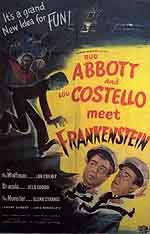
Speaking of parody, today, we naturally think of a film comedian who bases his appearance on the inclusion of humorous gags and jokes in a historical context or iconography of us already know. In fact, the process of creating a parody is far more complex and involves a large body of knowledge and experience: speaking of parody not simply refer to the comic genre or a particular type of humor, but to a text, or better a hypertext, the result of a thorough process of rewriting, which Gerard Genette speaks in his study of transtestualità.
Aimeri Frasca and remember that "The parody acquires importance not only as regards the result as an end in itself and its possible success at the box office, but also (and especially) because with the public, to aspire to and understanding the success of the product, it must be put as "philological study" of the kind that purports to represent, using the repertoire of knowledge of the operating rules of a genre that has every single spectator by virtue of long experience of vision. " Dan Harries
specifies that it is not a simple kind, nor a anti-genre (or meta-kind), but a "discursive process", a methodical approach to a particular text, which has the task of recontextualization through an ironic deconstruction of his royalties. It's an "intertextual discourse," that is characterized by a dialogue between different texts, where the irony becomes the central element, in order to distinguish the parody from the other forms of intertextuality. Mikhail Bakhtin argues that dialogue in a narrative form inevitably creates a stratification of language, a multilingual full of contrasts, which is the basic element of humor. The irony, moreover, according to Harries is generated not by the inconsistencies between the parody and its source, nor from their similarities, but the contrast generated by the presence of these two aspects in one text.
The parody is also frequently associated, sometimes rightly, two other forms of humorous intertext, from which, however, it is good to distinguish: the pastiche and satire. The first is a form of comic imitation lacks the critical distance characteristic of parody: the search feature humorous imitation of a text for its own sake, without drawing a deconstruction of its fees and languages. The satire, however, while presenting a strong critic, who is accompanied by imitation, is concentrating its efforts on a social-policy issue, while parody operates on a strictly literary and artistic .*
(more. ..) *
by Alvise Barbaro, Frankenstein. From horror to parody , Thesis, University of Milan, 2004.


0 comments:
Post a Comment